


Cabinet 101: A Beginner’s Guide to Understanding Cabinet Design Options
Starting a home renovation can feel exciting and overwhelming. Whether you’re designing a kitchen, mudroom, laundry room, bathroom, home office, or built-in storage, cabinetry plays a major role in both the appearance and functionality of your space.
One of the biggest surprises for many homeowners is just how many cabinet options exist. From construction styles and door profiles to finishes and storage accessories, there are countless ways to customize cabinetry to fit your home and lifestyle.
This guide covers a few of the first major decisions you’ll encounter during the cabinet design process so you can feel more confident as you begin planning your project.
Cabinet Construction: "Inset" versus "Overlay"
One of the first style decisions you may select is cabinet door construction.
Inset Cabinet doors sit flush inside the cabinet frame, creating a detailed, furniture-style appearance often associated with traditional or historic homes. This style requires a frame (you'll read more about that in #2), thoughtful construction, and tends to work best in a temperature-controlled environment as changes in humidity causing wood components to swell can make opening and closing doors feel a bit tighter at certainly times of the year.
Overlay Cabinet doors sit on top of the cabinet frame and are the most common style used today. Your options here range from "partial overlay", where there is a bit gap between drawer and door faces, exposing some of the cabinet frame, to "full overlay" cabinetry which creates a more seamless, contemporary look.
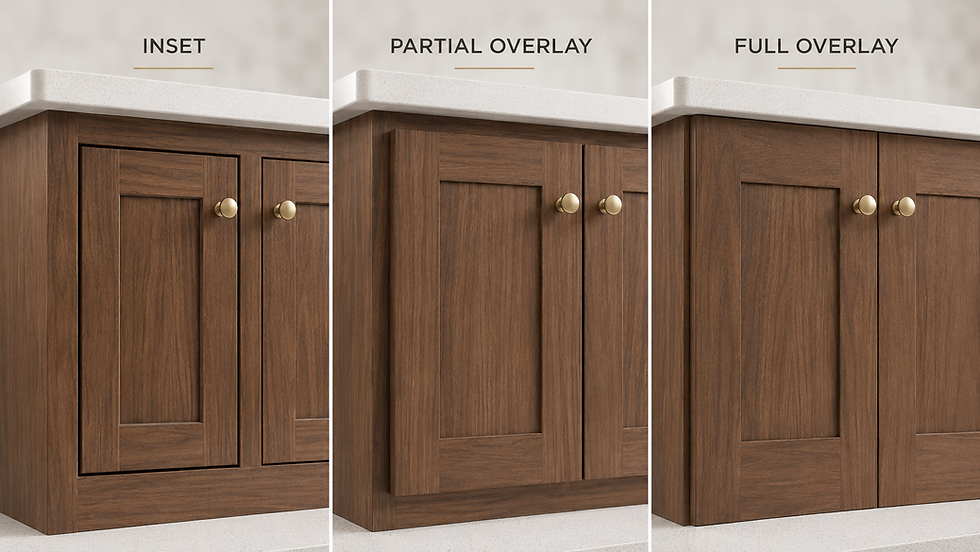
All options are excellent choices, and for most homeowners the decision comes down to personal preference, budget, and the desired aesthetic.
Cabinet Construction: "Framed" versus "Frameless"
Heads up, there's some industry jargon coming your way! Depending on the style you prefer, your cabinets will either be "framed" or "frameless". These terms refer to the way the boxes are constructed.
Framed Cabinets feature a face frame attached to the front of the cabinet box. This is a more traditional style of construction commonly used in classic and transitional designs.
Frameless Cabinets, or “European-style,” cabinets do not include a front face frame. This can provide slightly more usable storage space and often creates a cleaner, more modern appearance. This style has risen in popularity and allows for lots of design flexibility.
Ultimately, you don't need to get hung up on deciding which you'd prefer. Your designer will be able to advise on which type of box construction makes the most sense for your desired aesthetic as you go though the design process. But, if you're curious, the images below provide some visual context.

Cabinet Door Styles
Door styles can have a major impact on a space, and there are dozens of styles to choose from. Check out just some of the style options that are available to you!
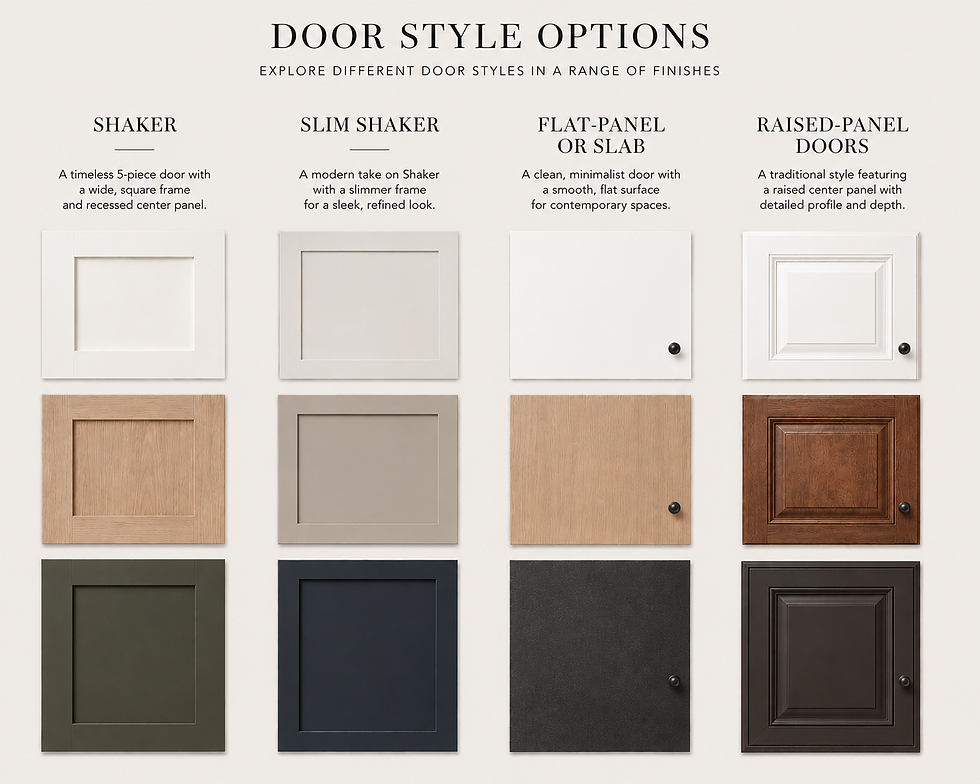
Once again, this decision truly comes down to personal preference, and your designer can help recommend a door style that suits the proportions of your space. We have many samples in our Showroom to experience first-hand!
Cabinet Finishes and Materials
Cabinet finishes help define the personality of a room.
Wood and Stained Finishes: Natural wood cabinetry highlights the grain and character of the material itself. Species like oak, maple, walnut, and cherry each offer their own unique appearance and warmth.
Painted Cabinetry offers nearly endless color possibilities, including custom color matching if desired. Modern painted finishes are highly durable and work well in both traditional and contemporary homes.
Modern Materials: For more contemporary spaces, materials like melamine and textured laminates provide sleek styling, durability, and easy maintenance.
Again, the best way to experience your options here is by visiting our Salem, Massachusetts Showroom. If appropriate, we can also let you borrow samples to bring home and view in your space, ensuring confidence in every design choice.
Cabinet accessories and organizational features
Once some of the more foundational decisions are made, your designer can help customize your space around how you live and use your home.
That may include:
Drawer cabinets for easier access
Pull-out storage solutions, including shelving, spice racks, or trash and recycling
Built-in dividers and inserts
Cubbies or coat pegs for mudroom spaces
Great interior design is about more than appearance — it’s about creating spaces that are organized, functional, and enjoyable to use every day. Check out just some of our solutions below!
Now that you're familiar with some of the options you'll be able to choose from, it's time to make an appointment to visit our Showroom. A Showroom appointment allows you to compare finishes, door styles, and storage solutions side-by-side while getting guidance tailored to your home and project goals.
Get in touch today!


Comments